The rating: one number for each run
Read the numbers, the colours and the boxes
What is it?
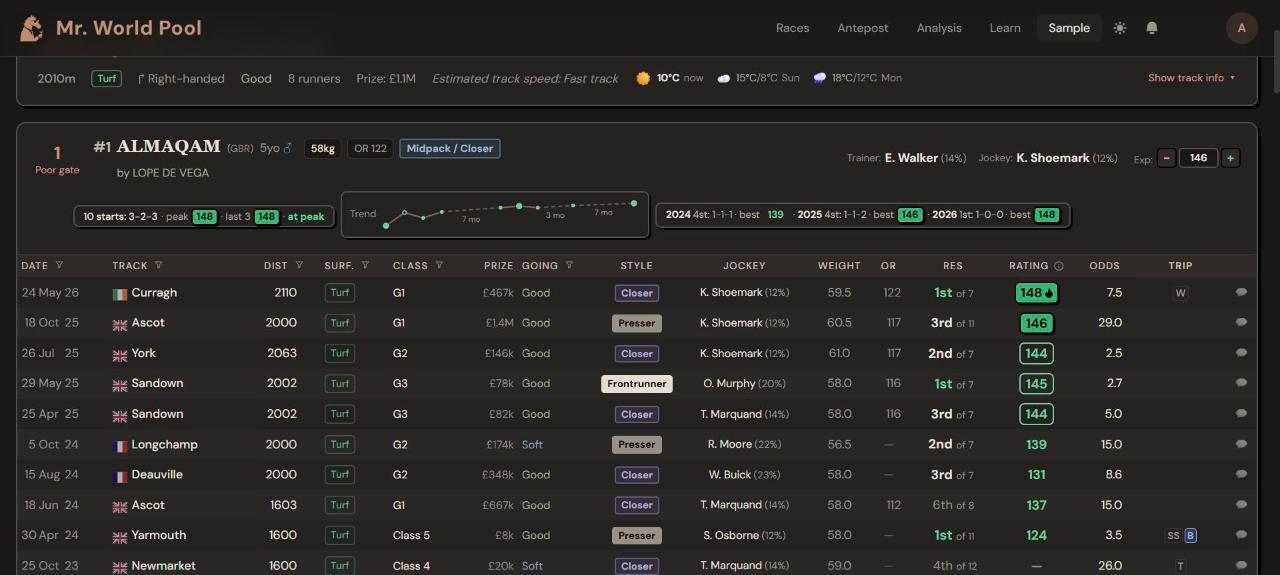
Every past run gets one number that says how well the horse ran that day. Higher is better. It already allows for the track, the distance and the weight carried, so a 120 means the same at Ascot, Meydan or Sha Tin.
How high is high?
| Rating | Roughly |
|---|---|
| 100 | A lower-grade handicapper on a Monday |
| 120 | A solid Saturday handicapper |
| 135+ | Group class |
| 145+ | Wins Group 1s |
| 150+ | The best in the world |
What do the colours mean?
Green numbers were run on turf. Sand-coloured numbers were run on dirt or all-weather. Don't compare one with the other without thinking.
What are the boxes?
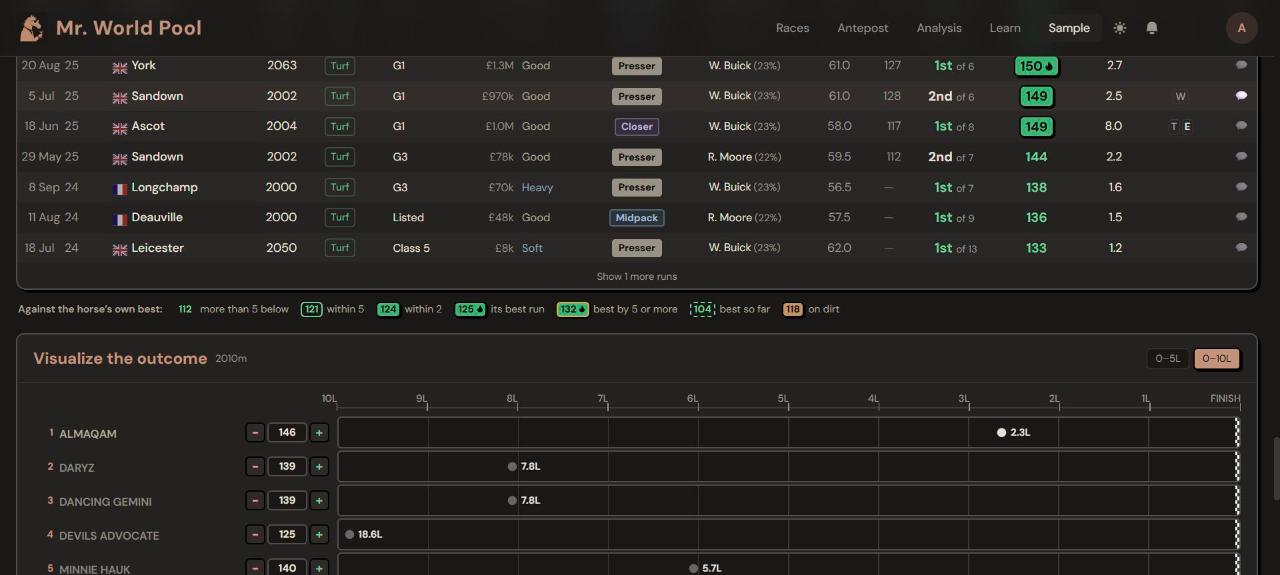
Each box compares that run with the horse's own best:
| Box | Meaning |
|---|---|
| 🔥 Flame | Its best run |
| Filled | Within 2 of its best |
| Frame | Within 5 |
| No box | More than 5 below |
| Dashed | Best so far, for a horse with too few runs to say |
The key sits under the form on every card, so you never have to remember it.
I know another scale. Can I use that?
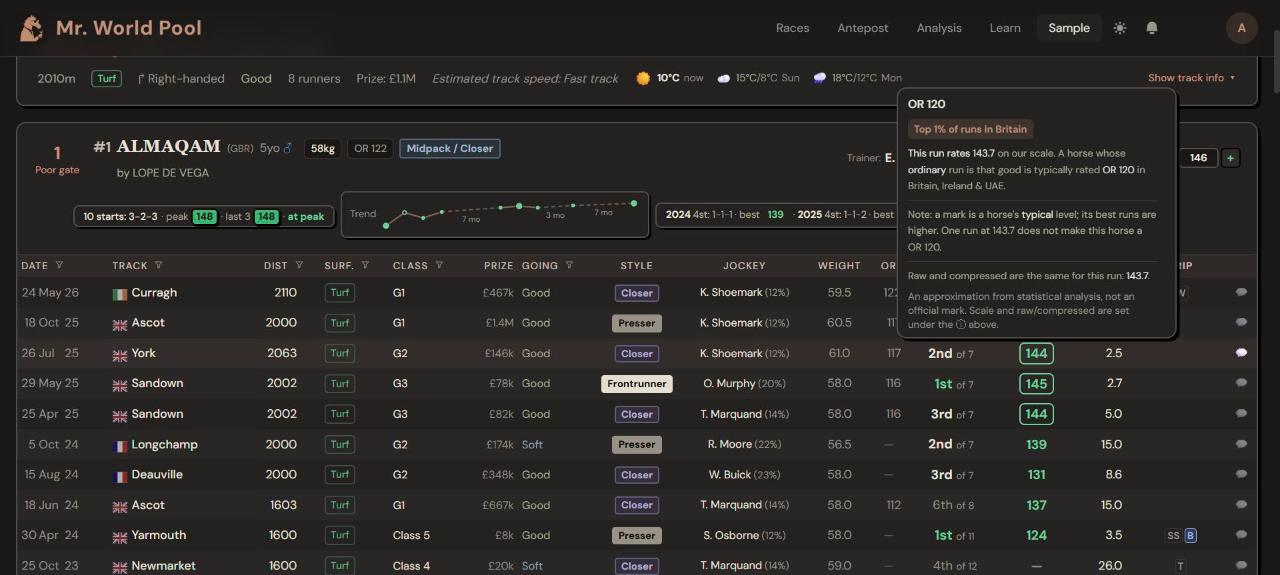
Yes. Hover any rating and we show what it corresponds to on a scale you know: British OR, Scandinavian formtall, German GAG, French Valeur, HKJC or Australian benchmarks.
What do people get wrong?
"The highest number wins." The rating describes a run that has happened. Today's ground, trip and luck are different. Use it to compare, then ask who is likely to run to their number today.
Everything else about the rating is on the ratings page.
See it on the card: open any racecard and press 📖 Tour at the top right. The tour points at each of these things in turn. Start the tour on the free sample card.
Want the thinking behind it? That is what the course is for. The Intro track is free; the full course is coming soon.